
How to calculate your chargeback ratio and manage chargeback risk
Your chargeback ratio is how card schemes and acquirers measure whether your business is operating within acceptable limits. This guide covers how to calculate it, what Visa and Mastercard's monitoring programme thresholds mean in practice, and how to manage chargeback risk before it affects your processing relationship.






Updated June 17, 2026

AI Summary


Your chargeback ratio is one of the most consequential metrics in your payment processing relationship. Card schemes use it to assess whether your business is operating within acceptable limits. Exceed the threshold, and your acquirer faces scrutiny—which flows directly to you in the form of restricted processing, higher reserves, or losing your merchant account entirely.
This guide explains how to calculate your chargeback ratio, what Visa and Mastercard's monitoring programme thresholds mean in practice, and how UK and EEA merchants can take concrete steps to manage chargeback risk before it becomes a processing problem.
This blog’s insights are partially based on Episode 10 of our Pay Attention Podcast, hosted by Fibonatix CEO Tal Miller. In this episode, Tal explores how chargeback ratios are calculated and how merchants can handle chargebacks effectively when monitoring business risk.
What is a chargeback ratio?
A chargeback ratio is a percentage that expresses how many of your transactions resulted in a chargeback within a given month. Card schemes and acquirers use it as a primary indicator of merchant risk. A deteriorating ratio triggers acquirer intervention, and at scheme level it can lead to fines or removal from card networks entirely.
The calculation is straightforward:
Number of chargebacks ÷ number of transactions × 100 = chargeback ratio (%)
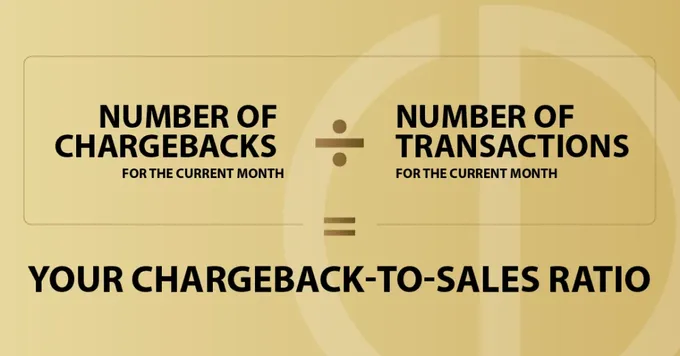
So if your business processed 2,000 transactions in a month and received 20 chargebacks, your chargeback ratio is 1%.
Beyond its use as a risk indicator, your chargeback ratio is a useful metric for financial planning. Chargebacks reduce total revenue, and if they exceed a certain volume, they compress margins in ways that compound over time. Your payment service provider can supply the chargeback data you need to run this calculation and track it consistently.
Card scheme monitoring programme thresholds
Both Visa and Mastercard operate monitoring programmes that assess chargeback and fraud levels at acquirer level. If your ratios contribute to your acquirer breaching scheme thresholds, the consequences flow directly to you.
Visa – VAMP (Visa Acquiring Monitoring Programme)
Visa's current framework combines reported fraud (TC40) and non-fraud disputes (TC15) into a single ratio. The thresholds acquirers must stay within are:
Tier | VAMP ratio | Status |
|---|---|---|
Above Standard | ≥0.5% | In enforcement since June 2025 |
Excessive | ≥0.7% | In full enforcement since October 2025 |
VAMP monitoring applies where a merchant generates a minimum of 1,500 combined fraud and non-fraud disputes per month. Merchants below that volume are not in scope for formal scheme-level enforcement, but acquirers apply their own internal thresholds regardless.
Mastercard – Excessive Chargeback Programme (ECP)
Mastercard's ECP uses a basis point calculation: chargebacks received in the current calendar month divided by Mastercard transactions in the preceding month, multiplied by 10,000. This differs from Visa's method and means the two ratios are not directly comparable.
Merchants that breach ECP thresholds are designated either an Excessive Chargeback Merchant (ECM) or a High Excessive Chargeback Merchant (HECM). After six months at either designation, Mastercard may require acquirers to undergo a formal risk review.
Assessing your chargeback ratio in context
Not all chargeback ratios carry the same weight. Some sectors, including online trading, dating services, adult physical goods, and CBD, usually see higher dispute rates as a structural feature of the business, not necessarily a sign of poor operations. UK and EEA merchants in these categories need to assess their ratio against their sector's typical range, not against a generic benchmark.
If your ratio sits within the normal range for your industry, it may simply reflect the cost of doing business in that category. If it is running above sector norms, that warrants a closer look at what is driving the volume.
Your acquirer or payment service provider should be able to give you industry-level chargeback data to use as a reference point. If your ratio is elevated relative to comparable merchants, that is the signal to start investigating root causes rather than waiting for the acquirer to raise it with you.
How to mitigate chargeback risk by category
Card schemes assign a reason code to every chargeback. Once you know which reason codes dominate your dispute volume, you can take targeted action rather than applying generic fixes across the board.
» Losing revenue to chargebacks? Explore how to reduce chargeback losses
Fraud
Fraud is the most common reason code acquirers assign to chargebacks, and it is also the most frequently misapplied. This is a pattern that includes legitimate friendly fraud disputes filed under a fraud code. If fraud codes account for most of your volume, the priority is authentication.
Implementing 3D Secure 2 (3DS2) adds a layer of verification at the point of sale that shifts liability back to the card issuer for authenticated transactions. Pre-dispute alert tools such as Ethoca and Verifi allow you to resolve flagged transactions before they escalate to a formal chargeback.
Customer disputes
Where most of your chargebacks carry service-related codes (unrecognised transactions, goods not received, or not-as-described claims), the problem is usually operational rather than fraud-related. Card issuers record customer claims in writing, and reviewing chargeback letters with your PSP will quickly surface whether the issue is fulfilment, unclear billing descriptors, or customer communication.
For merchants in sectors such as dating services or adult physical goods, an unrecognised billing descriptor is a particularly frequent trigger and one of the easiest fixes available.
Processing errors
If your chargebacks cluster around processing error codes, examine your transaction infrastructure for the specific failure points. Automated currency detection that charges a customer in the wrong currency, duplicate transaction submissions, and settlement timing errors all generate avoidable disputes.
An essential part of chargeback management is distinguishing between disputes that indicate a fixable problem and those that are a baseline cost of operating in your sector. Not every chargeback signals something wrong.
Benchmarking your chargeback ratio against industry trends
Raw numbers alone tell you little without context. Beyond knowing your own ratio, it is worth understanding whether the reason codes driving your chargebacks are typical for your sector or an outlier.
A PSP with an active portfolio of UK and EEA merchants in your category should be able to provide that reference point—both the ratios typically seen in your vertical and the reason codes that dominate dispute volume there.
Your own historical data is equally useful. Tracking your chargeback ratio month by month reveals seasonal patterns that would otherwise look like unexplained spikes.
Many merchants in consumer-facing categories (dating services, adult physical goods, CBD) see dispute volumes increase around peak purchase periods. Once you have identified those patterns, you can prepare in advance rather than reacting after the fact.
If your ratio is consistently elevated relative to both your sector norm and your own baseline, that is the signal to take the root cause analysis seriously and bring your PSP into the conversation.
Managing your chargeback ratio before it becomes a processing problem
Chargebacks are an unavoidable part of processing card payments, but an unmanaged chargeback ratio is a direct threat to your processing relationship. The merchants who stay within scheme thresholds are the ones who track their ratio consistently, understand what their reason codes are telling them, and act before their acquirer raises the issue.
Fibonatix works with established UK and EEA merchants in specialist categories where dispute rates attract closer scrutiny. We give merchants real-time visibility of their fraud and dispute exposure, 3DS2 authentication, pre-dispute resolution tools, and a named account manager who understands the compliance environment your business operates in.
Fibonatix (UK) Limited, company number 09738892, is authorised and regulated by the UK Financial Conduct Authority (FCA) as a Payment Institution (FRN 768776).
FAQs
What is a good chargeback ratio for a merchant?
There is no universal target, but staying well below 0.5% gives you a buffer against Visa's Above Standard VAMP threshold. Merchants in specialist categories—online trading, dating services, adult physical goods, CBD—typically run higher than mainstream sectors, so benchmarking against your own vertical is more meaningful than chasing a generic figure.
How do Visa and Mastercard calculate chargeback ratios differently?
Visa's VAMP ratio combines reported fraud (TC40) and non-fraud disputes (TC15) and divides them by transactions in the current month. Mastercard's ECP uses chargebacks received in the current month divided by Mastercard transactions in the preceding month—meaning the two ratios are not directly comparable and need to be tracked separately.
What happens if my chargeback ratio exceeds the card scheme threshold?
The direct consequence falls on your acquirer first: breaching scheme thresholds triggers scrutiny, fees, and requirements to remediate their portfolio. For you as the merchant, that translates to processing restrictions, increased rolling reserve requirements, or termination of your merchant account.
How often should I calculate my chargeback ratio?
Card schemes assess chargeback ratios on a monthly basis, so monthly tracking is the minimum. Merchants with higher dispute volumes benefit from real-time monitoring through their PSP, which allows problems to be caught and addressed before they show up in monthly scheme reporting.
Can my payment service provider help me lower my chargeback ratio?
Yes. A PSP with experience in your sector can supply industry benchmarks, help you identify root causes from your dispute reason codes, and provide tools—including 3DS2 authentication and pre-dispute alert services—that reduce dispute volume before it affects your ratio.